After its first iteration in Bandung - Indonesia, this second chapter unfolds in Gwangju - South Korea, engaging the local atmosphere, sensory culture, and daily rhythms surrounding the Asia Culture Center.
Participants were invited to explore the ACC area through sensewalking, an embodied method of perceiving space through sound, smell, texture, and movement.
Each encounter became sensory data, later translated into a graphic score that transforms the sensory landscape into sound.
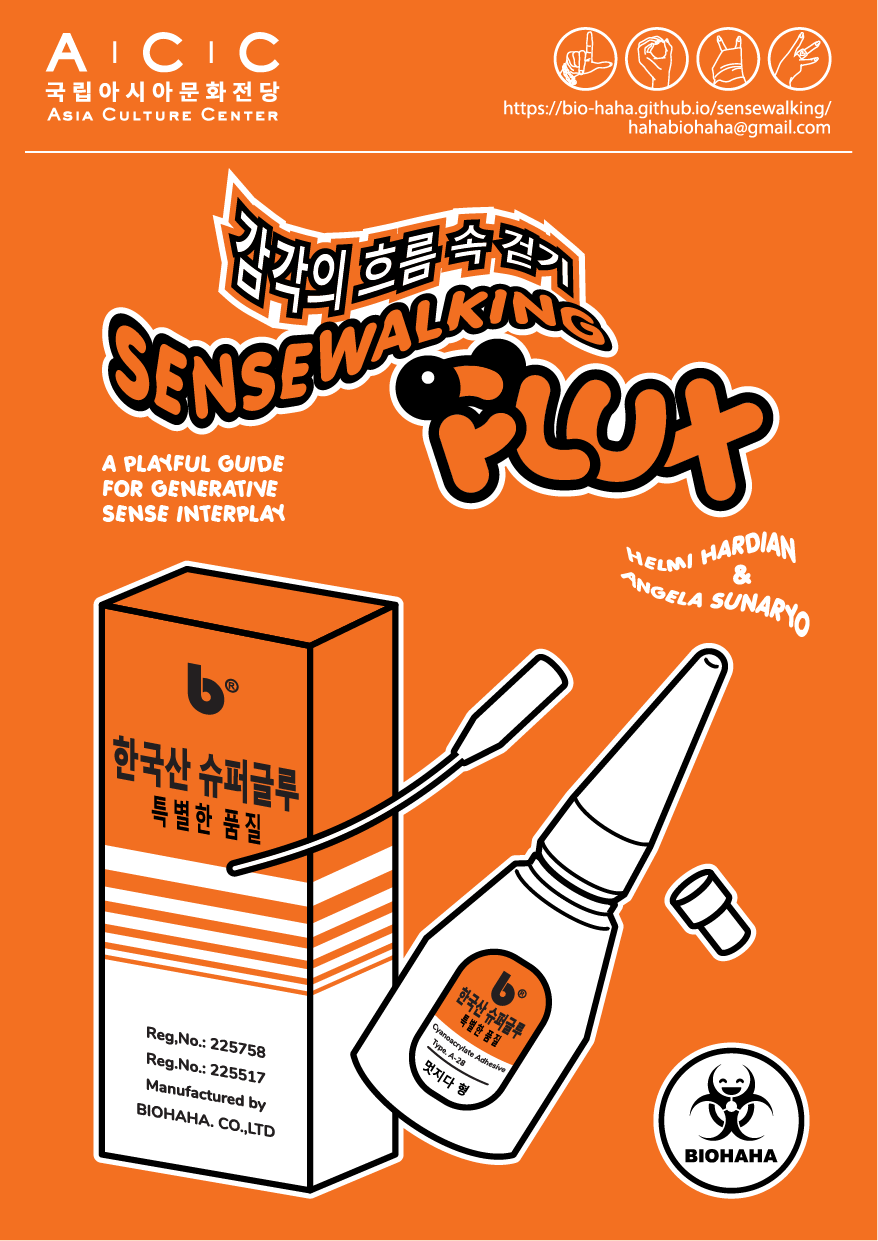
Sensewalking Flux Zine - ACC Download
This project unfolds in two phases:
// Sensewalking & Mapping – Participants engage in guided sensory walks, using their bodies as instruments to navigate space through sight, sound, touch, smell, and taste. These observations are recorded through sketches, textures, and notations, forming a generative graphic score that captures an intersubjective experience of the urban environment.
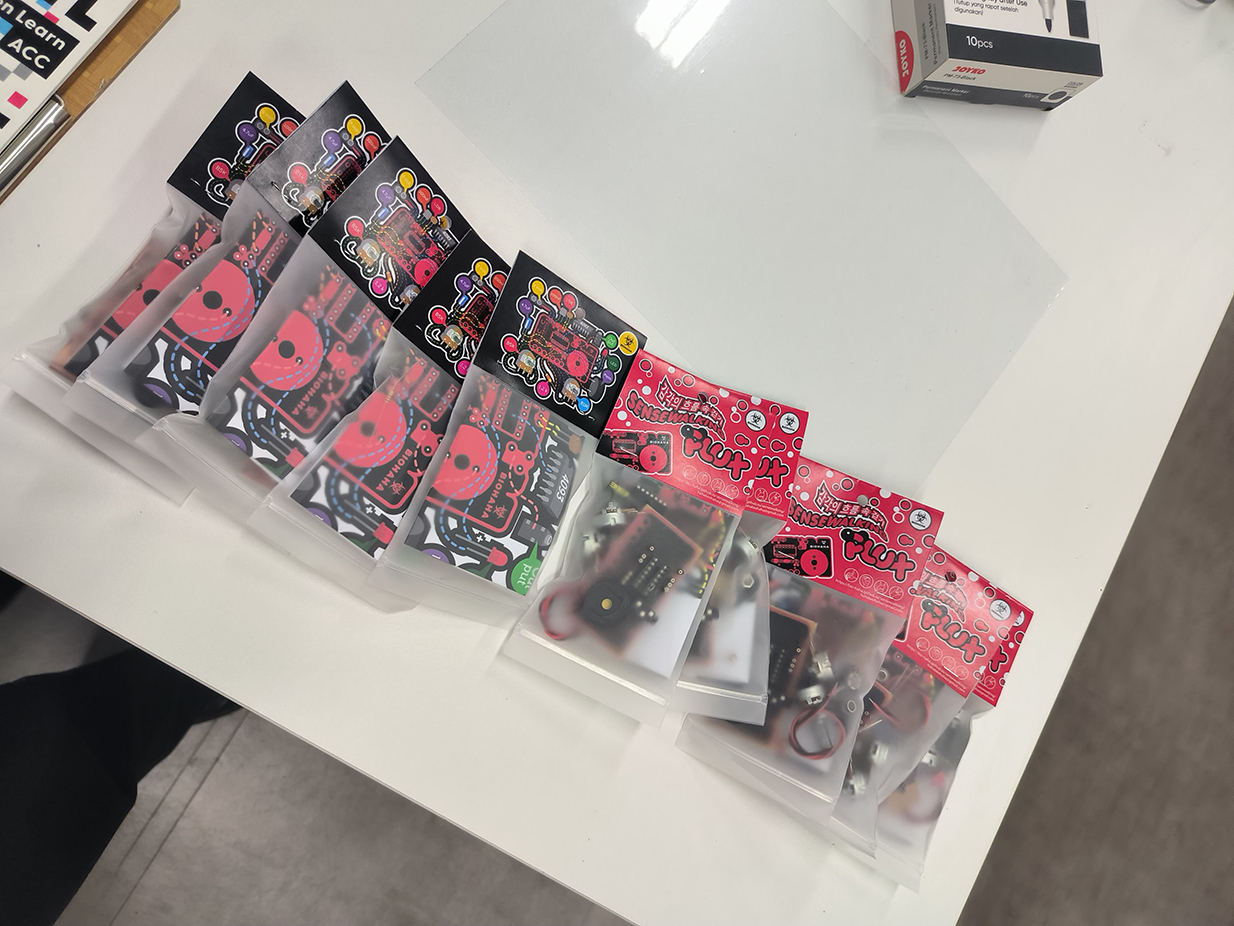
// DIY Bio-Synth Workshop – Participants assemble a light-sensitive synthesizer that converts visual stimuli into sound, creating a tactile and sonic link between perception and the environment.
Optional Phase:
// Collective Audio-Visual Performance – The generated score serves as a guide for an improvised performance in public space, merging movement, sound, and visual projections into an intersubjective ecology between body, space, and technology.

This project highlights spontaneity, perception, and intersubjectivity, fostering an egalitarian interaction between the landscape and its inhabitants. By positioning the environment as a "living instrument," Sensewalking Flux celebrates the unpredictability that emerges from the ecotone between body, space, and technology.
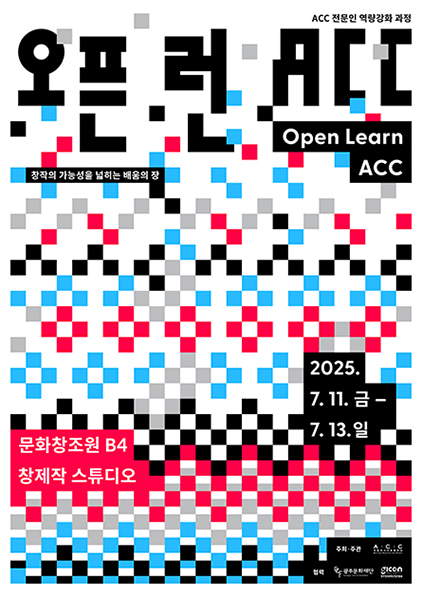
Open Learn ACC
An educational event for artists and creators who are expanding the boundaries of creativity through new media technologies
Open Learn ACC is a learning platform that expands the possibilities of artistic creation through new media technologies. It offers a variety of programs, including lectures, workshops, and talks, for artists, creators, and students majoring in art and new media. Participants explore artistic practices within a contemporary technological environment and explore new directions in their work. This event prioritizes collaborative learning and experimentation over general knowledge transfer. Participants expand their creative perspectives and expressions through diverse experimentation and interpretation. Open Learn ACC is a program for those exploring creative directions through technology and art.
Open Learn ACC
Period: July 11, 2025 (Fri) - July 13, 2025 (Sun)
Hour: 10:00 - 20:00 * Please refer to the detailed times for each program
Location: Cultural Information Center B4 Creative Production Studio
Target: Artists, creators, art and new media students, etc.
Personnel: Varies by program
Application: Online application via Google Form
Inquiry: 062-601-4312
Tuition fees: free
Guide: To account for the rate of duplicate applications, some programs are temporarily extending their application deadlines.
etc: ※ Some programs can be applied for until 6:00 PM on Wednesday, July 9th.
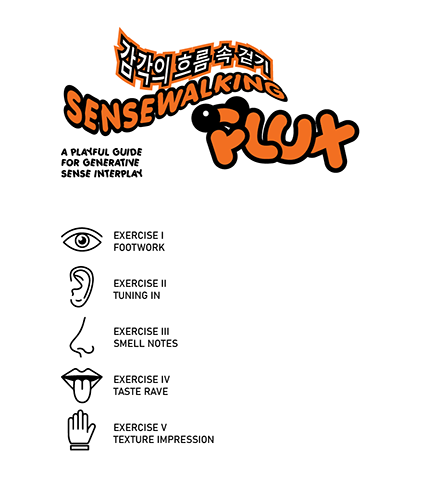
Walking in the flow of senses 감각의 흐름 속 걷기
This workshop is for artists who want to explore the city through their bodily senses and translate those experiences into sound. They will create visual scores based on sensory walking and documentation, and experiment with the connections between the city, technology, and the senses through DIY biosynths they assembled themselves.
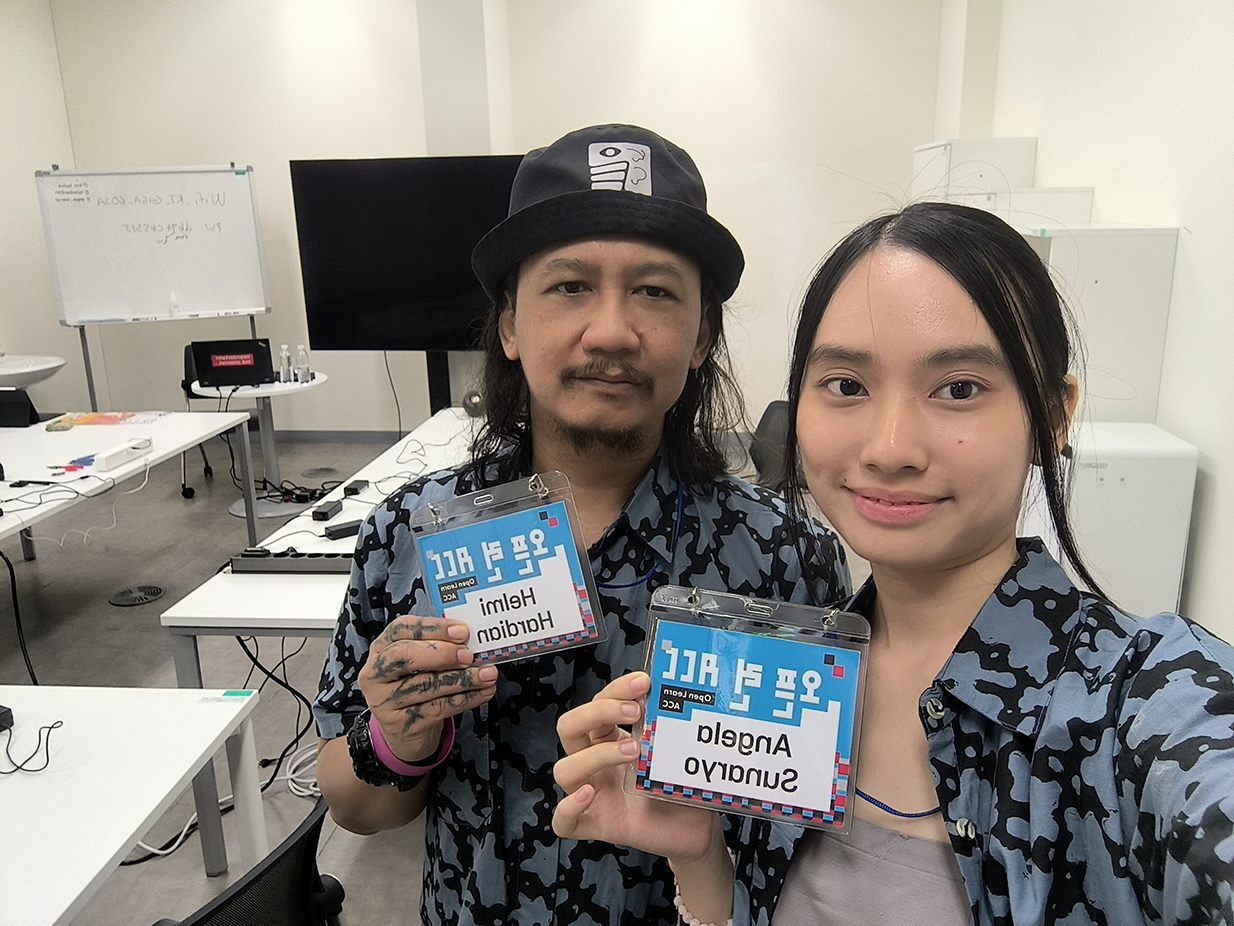
Co-founded by Bandung-based media artists Helmi Hardian and Angela Sunaryo, Biohaha is a collaborative platform exploring the boundaries of biology, technology, and subculture. They continue their ecologically centered artistic practice through sound, walking, and performance-based mapping, exploring the city and nature.
Sensewalking & Mapping
In this first phase, participants moved through the Asia Culture Center area, tracing invisible paths of sound, texture, light, smell, taste, humidity, and rhythm.
They documented their perceptions through sketches, words, recordings, and bodily gestures.

Bio-Synth Assembly
Think of it as a tiny electronic creature that listens to the world in ways we can’t. Instead of using a microphone, it captures light intensity and turns it into sound. The brighter the light, the louder or higher the pitch, kind of like the city humming its own tune!
It’s about expanding perception, listening to the environment beyond human senses, and finding new ways to interact with urban space.
Ready to tune in? Let’s build, explore, and make the city sing!
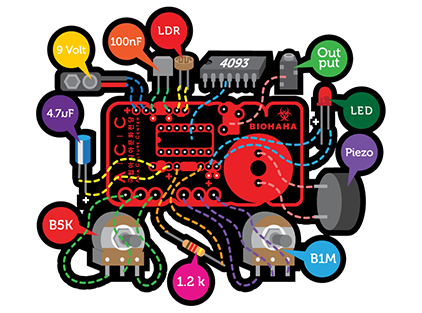
DIY Bio-Synth Instruction Manual
Phase 1
Sensewalking & Mapping
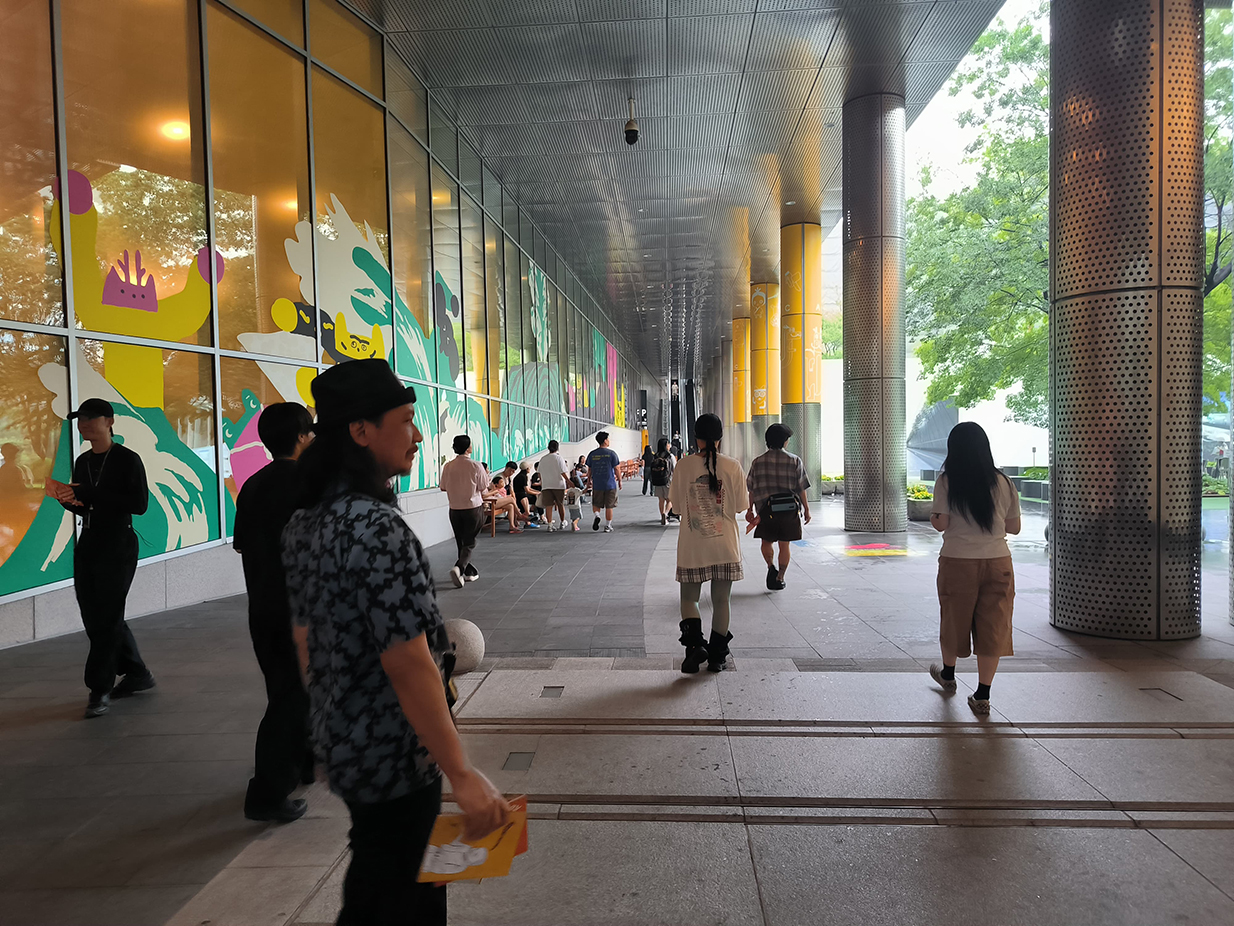
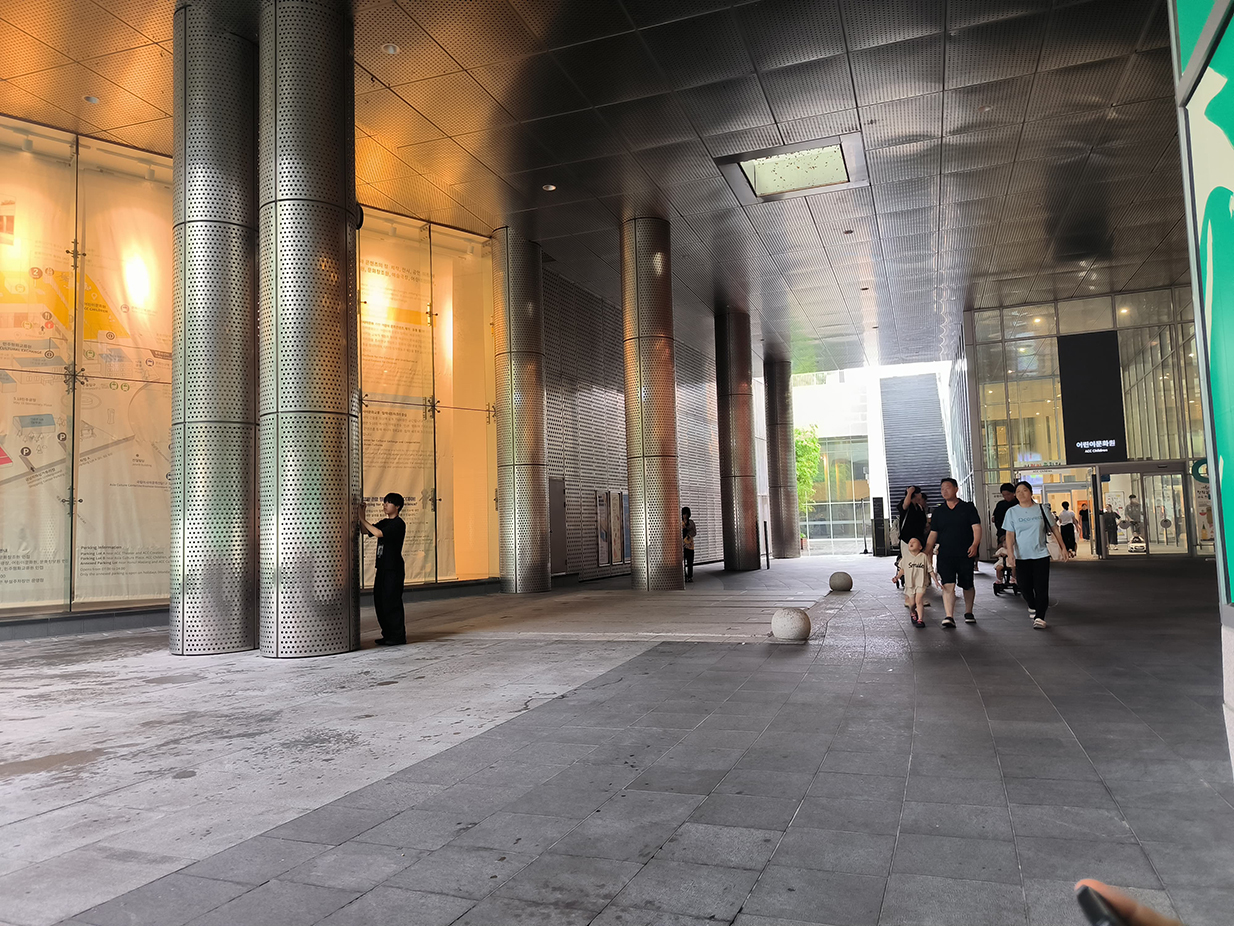
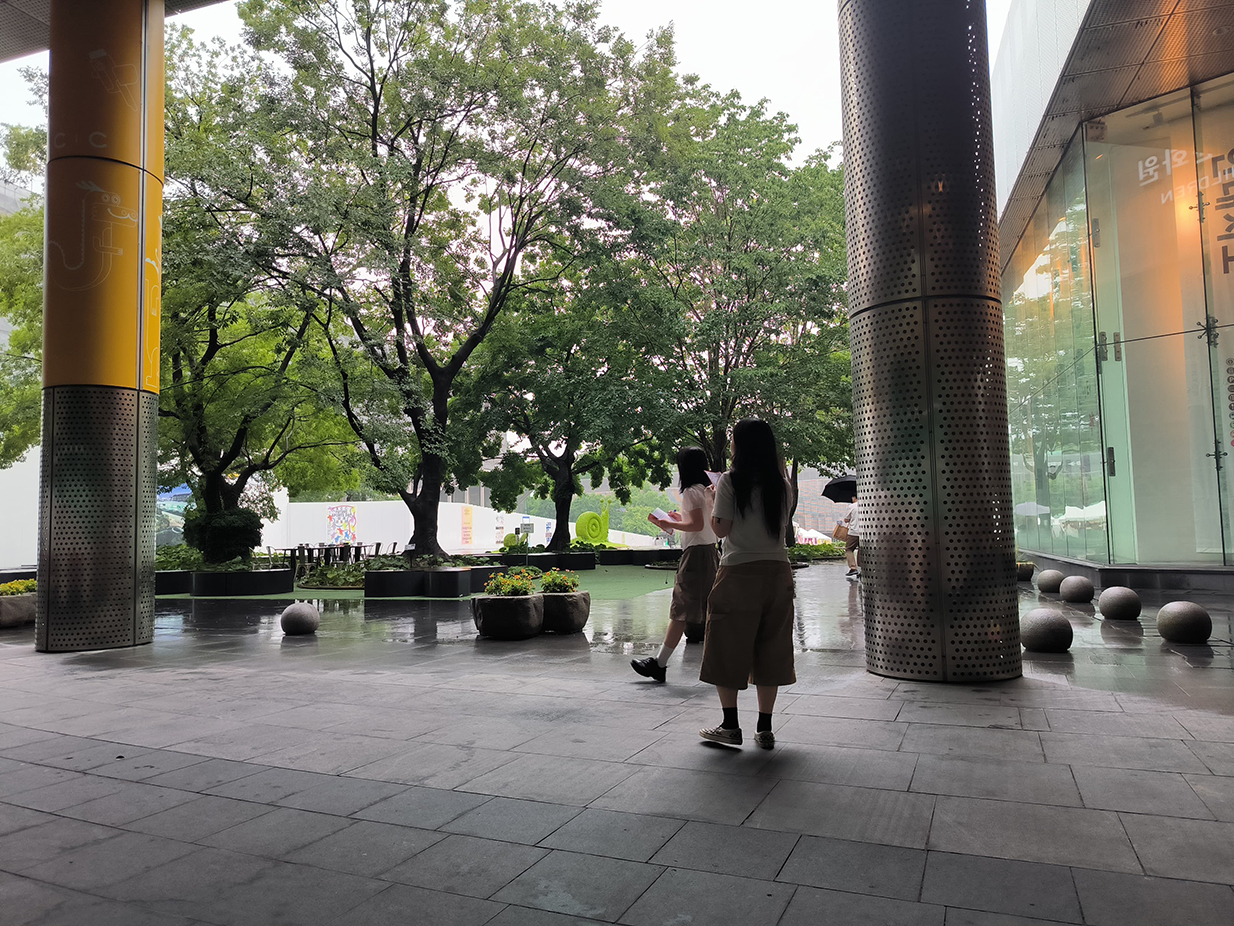
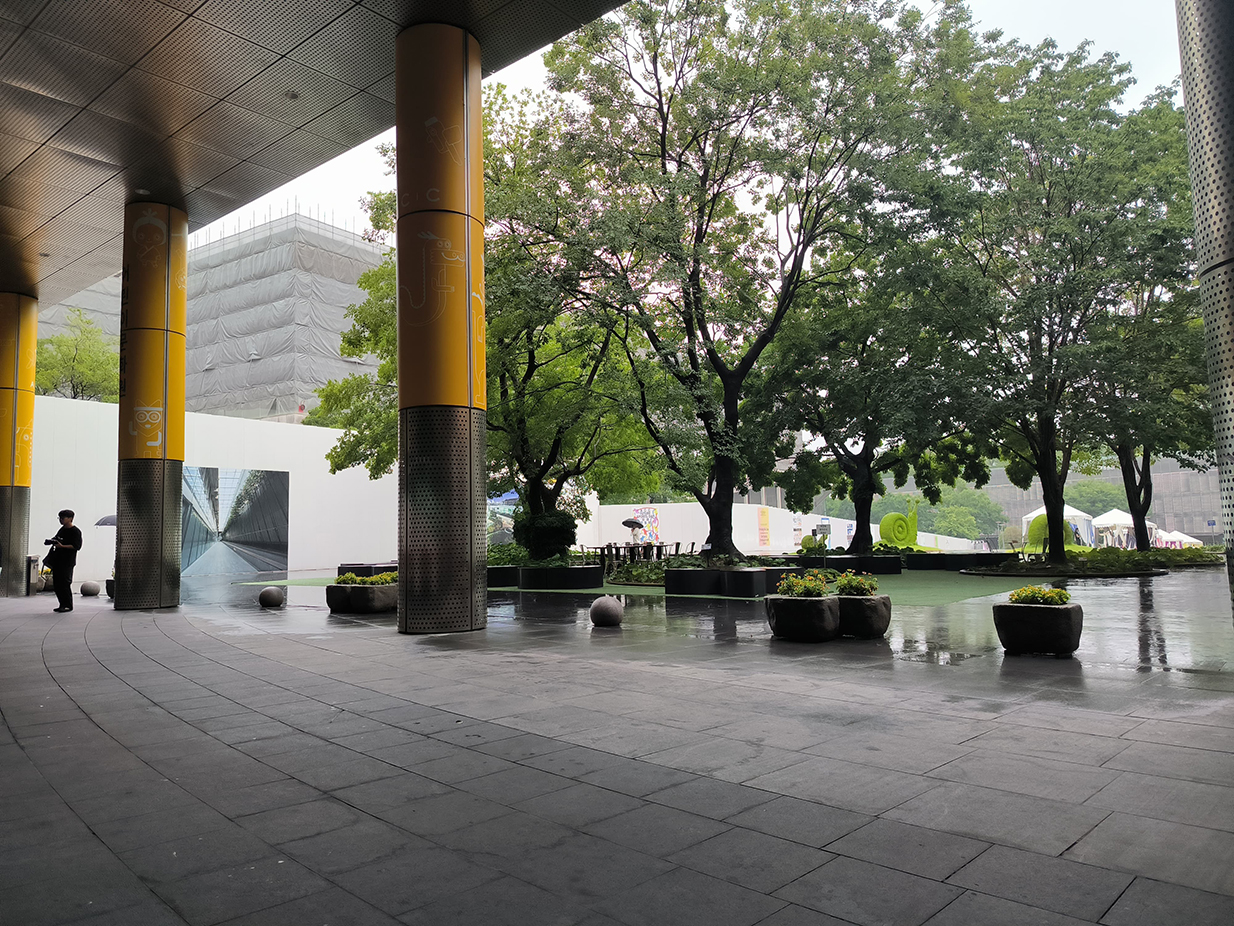
"Observing the environment around Asia Culture Center, Gwangju through the senses—textures, movements, sounds, and the shifting rhythm of the space."
ACC, Gwangju | 13 July 2025
Reflections on Phase 1
Sensewalking & Mapping
Phase 1 of Sensewalking Flux unfolded in the outdoor corridor near the ACC Children’s entrance. A light afternoon rain redirected our planned outdoor walk into this sheltered space, which unexpectedly became a rich site for sensory exploration. The corridor was lively because it was the weekend; families moved in and out, and children ran past with a mix of laughter, shouts, and hurried footsteps. What could have been a simple transition area turned into a dynamic environment shaped by weather, movement, and chance encounters.
The participants, mostly students and individuals with artistic backgrounds, responded to this setting with curiosity. Many began by noticing textures. Some observed the difference between dry patches of concrete and areas darkened by rain. Others touched the large pillars, describing how their surfaces felt cold and smooth, especially compared to nearby materials that were damp or slightly porous. These contrasts made the corridor feel like a collection of micro-environments.
Movement became another point of focus. Participants watched how children moved quickly, running around back and forth. While their parents walked with slower, steadier steps. The shifts in speed, posture, and direction created an unchoreographed dance that shaped how the space was perceived from moment to moment.
Sound added yet another layer. Children’s voices echoed along the length of the corridor. Birds called from overhead. From the far end, the steady flow of traffic could be heard, reminding us of the city just beyond the sheltered walkway. One participant even tasted the rain that drifted in with the wind. Others noticed how the air changed: sometimes just a cool breeze, sometimes wind carrying tiny droplets that touched the skin lightly.
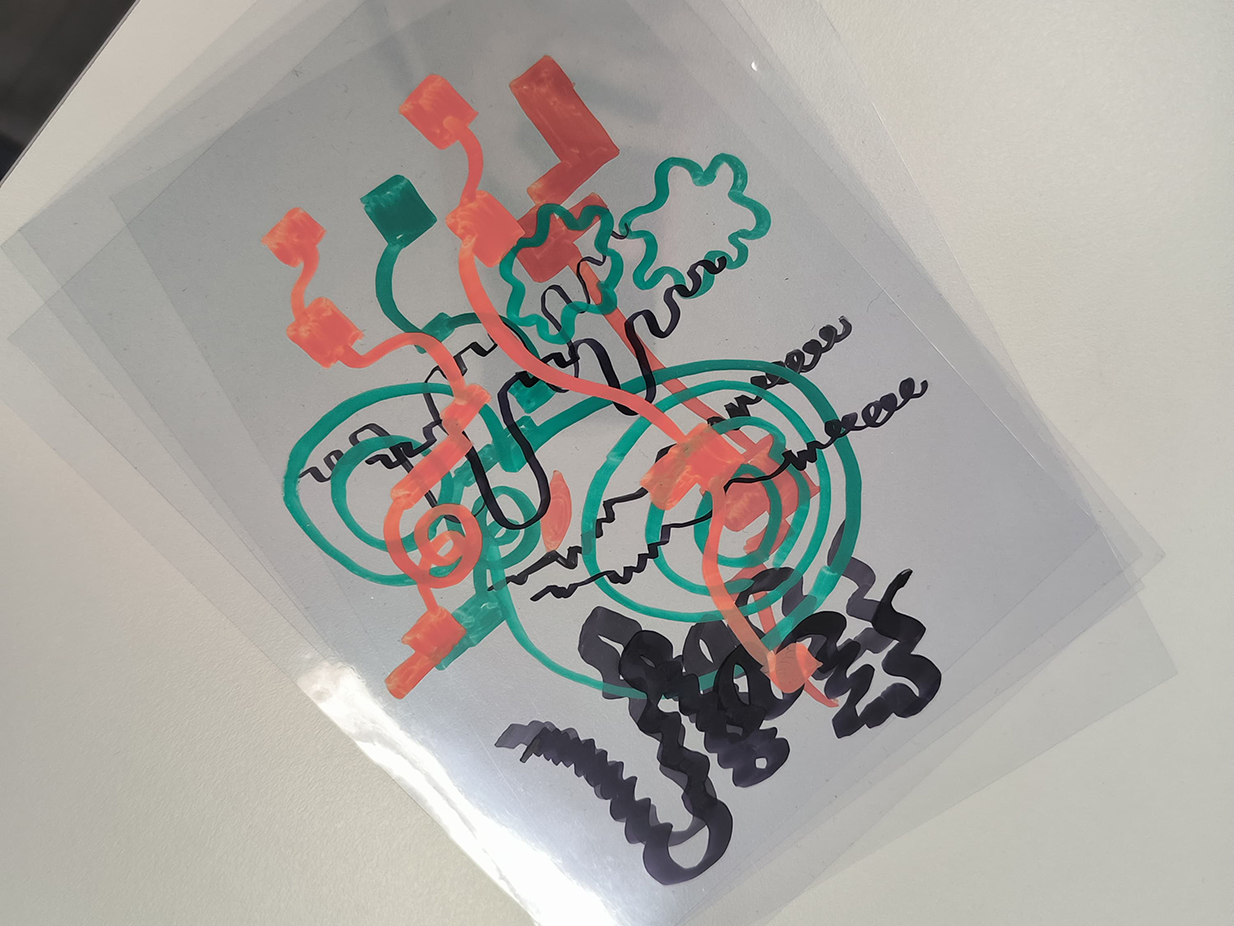
Each of these impressions was translated into a graphic score, forming a personal sensory map. The exercise showed how even an ordinary corridor can become an intricate field of perception when we slow down and pay attention. Phase 1 highlighted that the space is not merely something to look at. It is something that we feel, listen to, breathe in, and move through. Our bodies become instruments of sensing, making every step a way of understanding place more deeply
Phase 2
DIY Bio-Synth Workshop
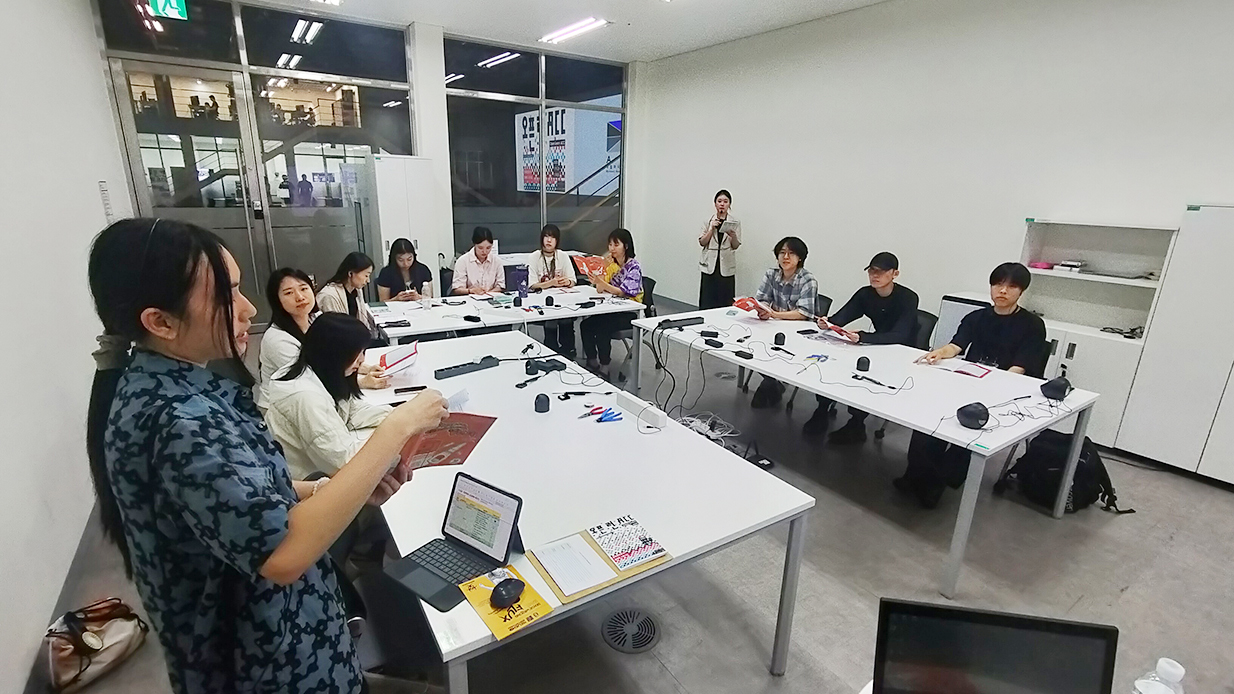
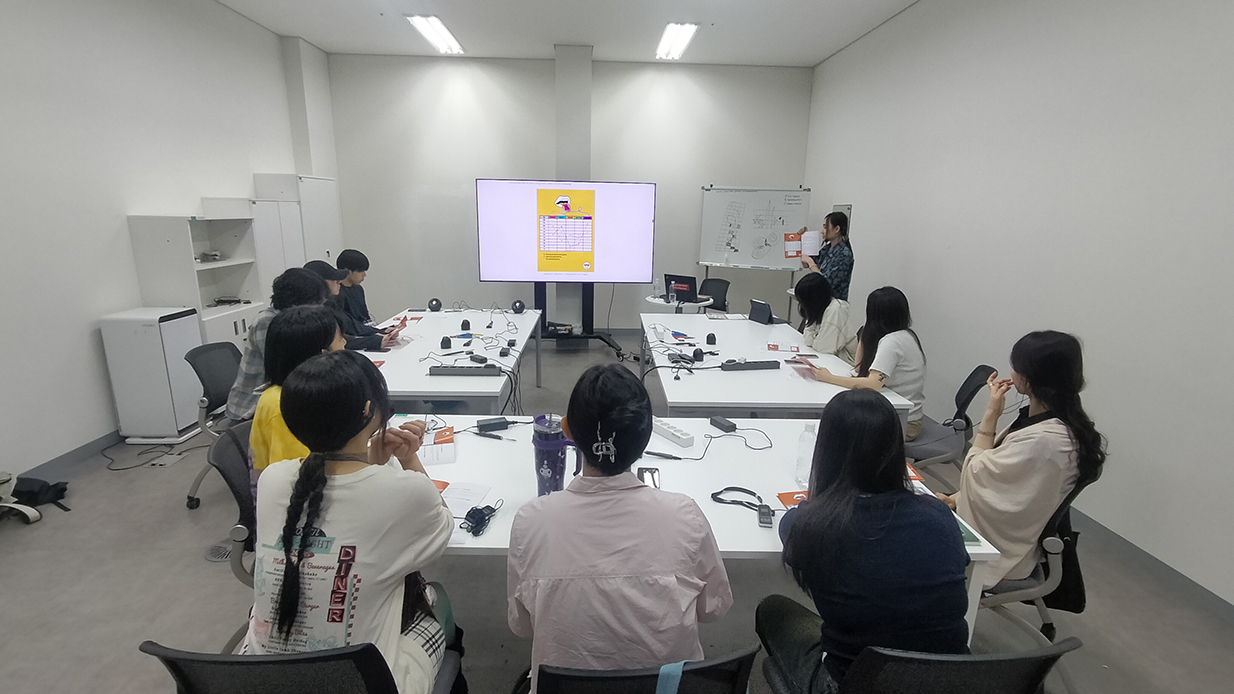
"Building, tweaking, and experimenting—participants shape sound through circuits and collaboration."
ACC, Gwangju | 13 July 2025
Reflections on Phase 2
DIY Bio-Synth Workshop
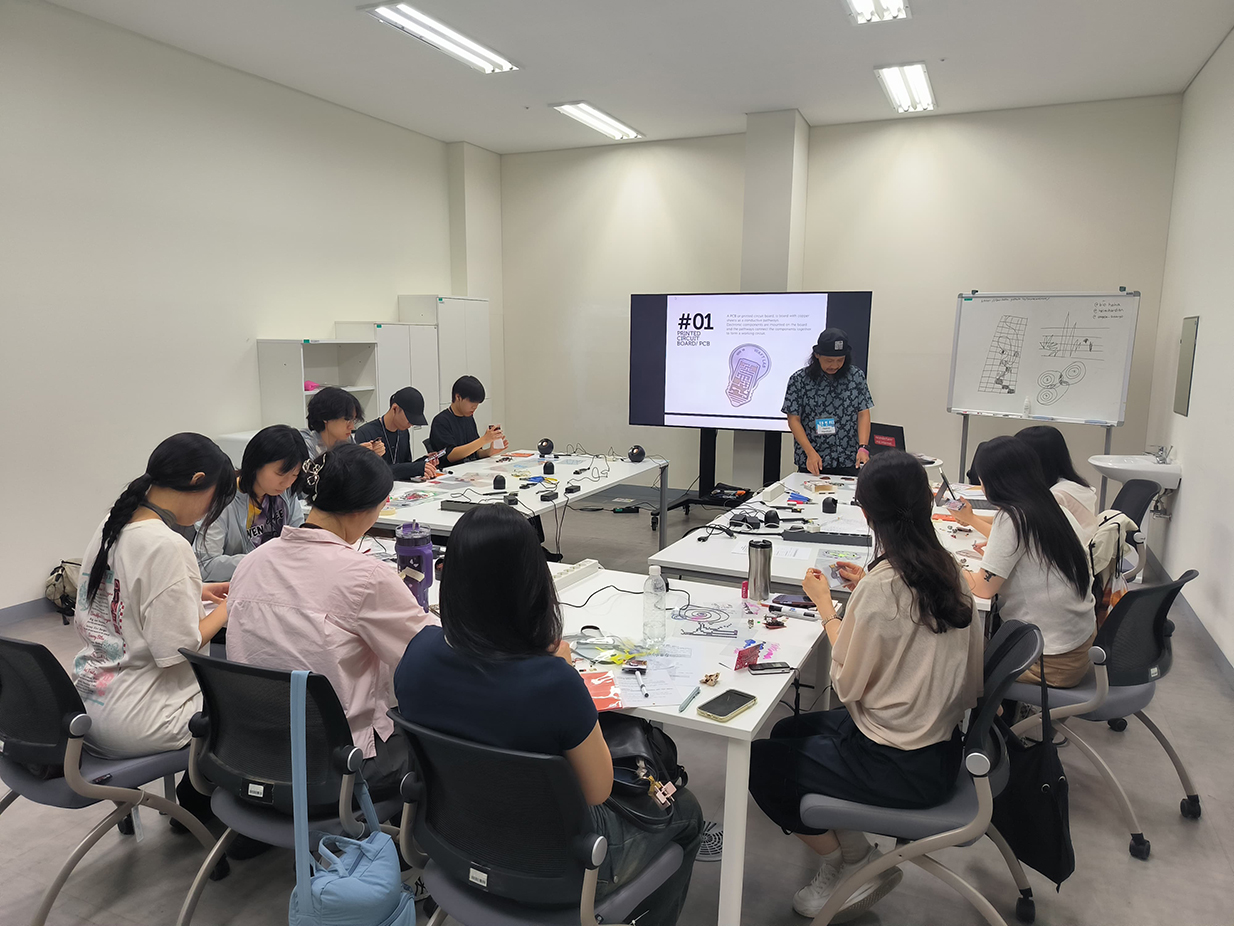
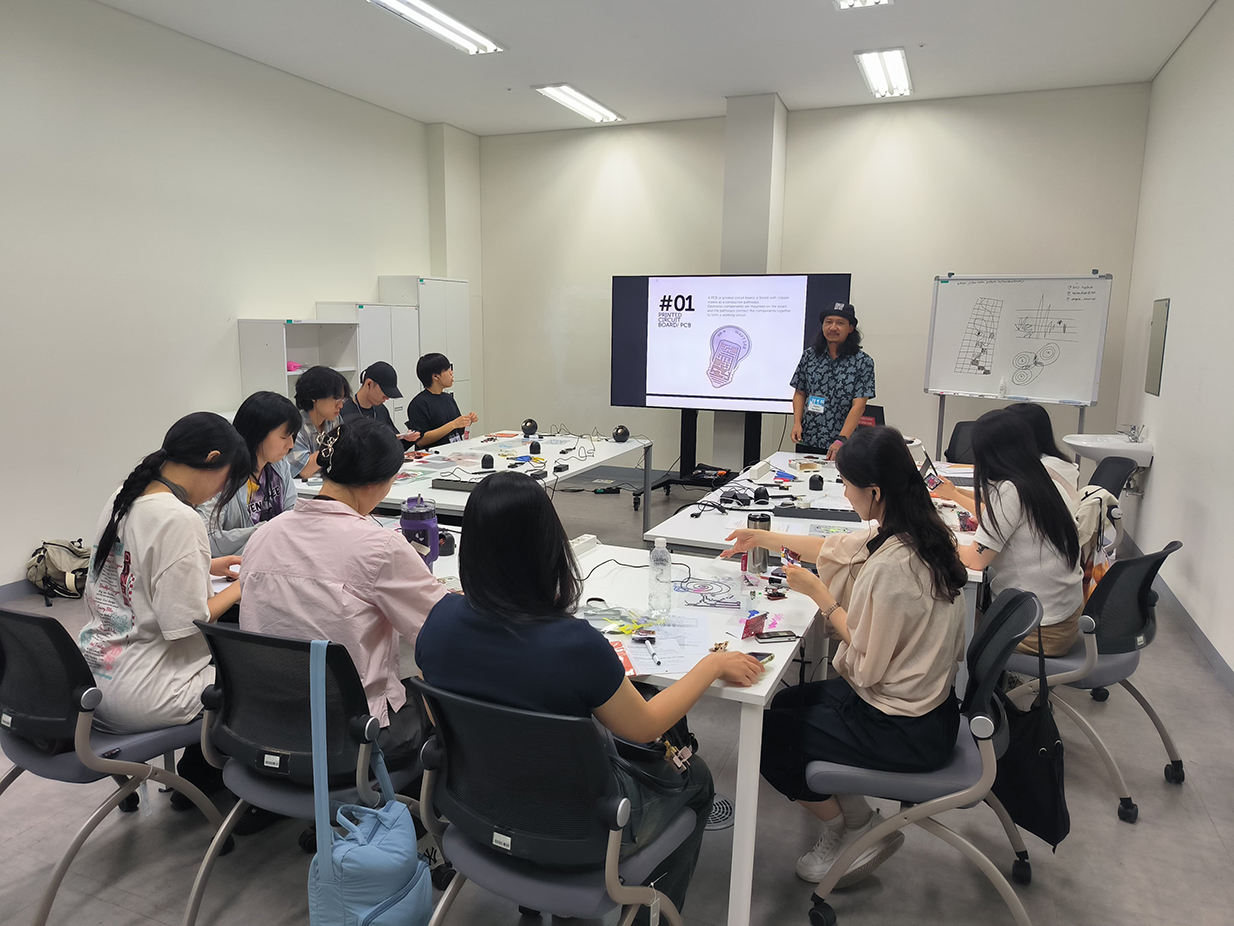
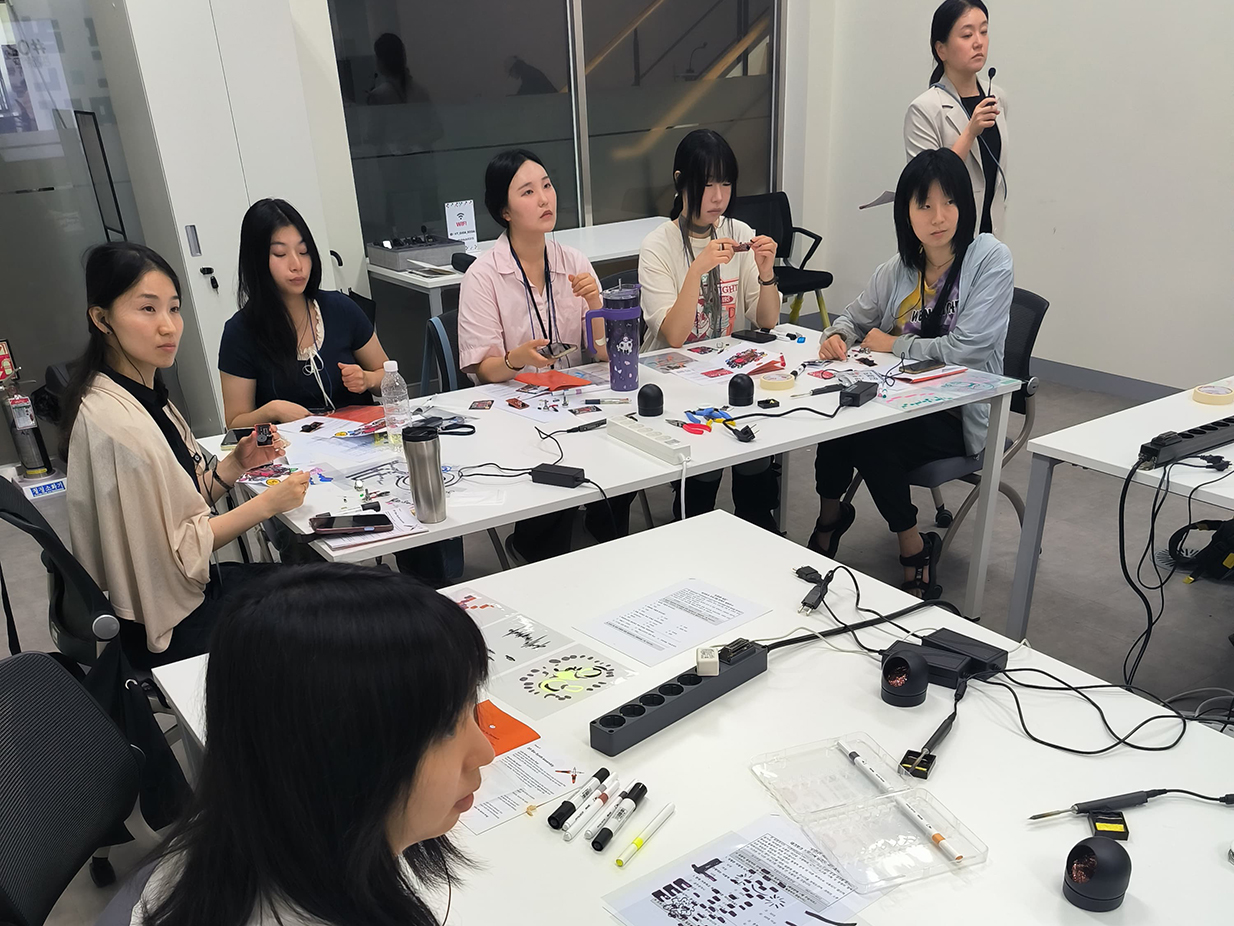
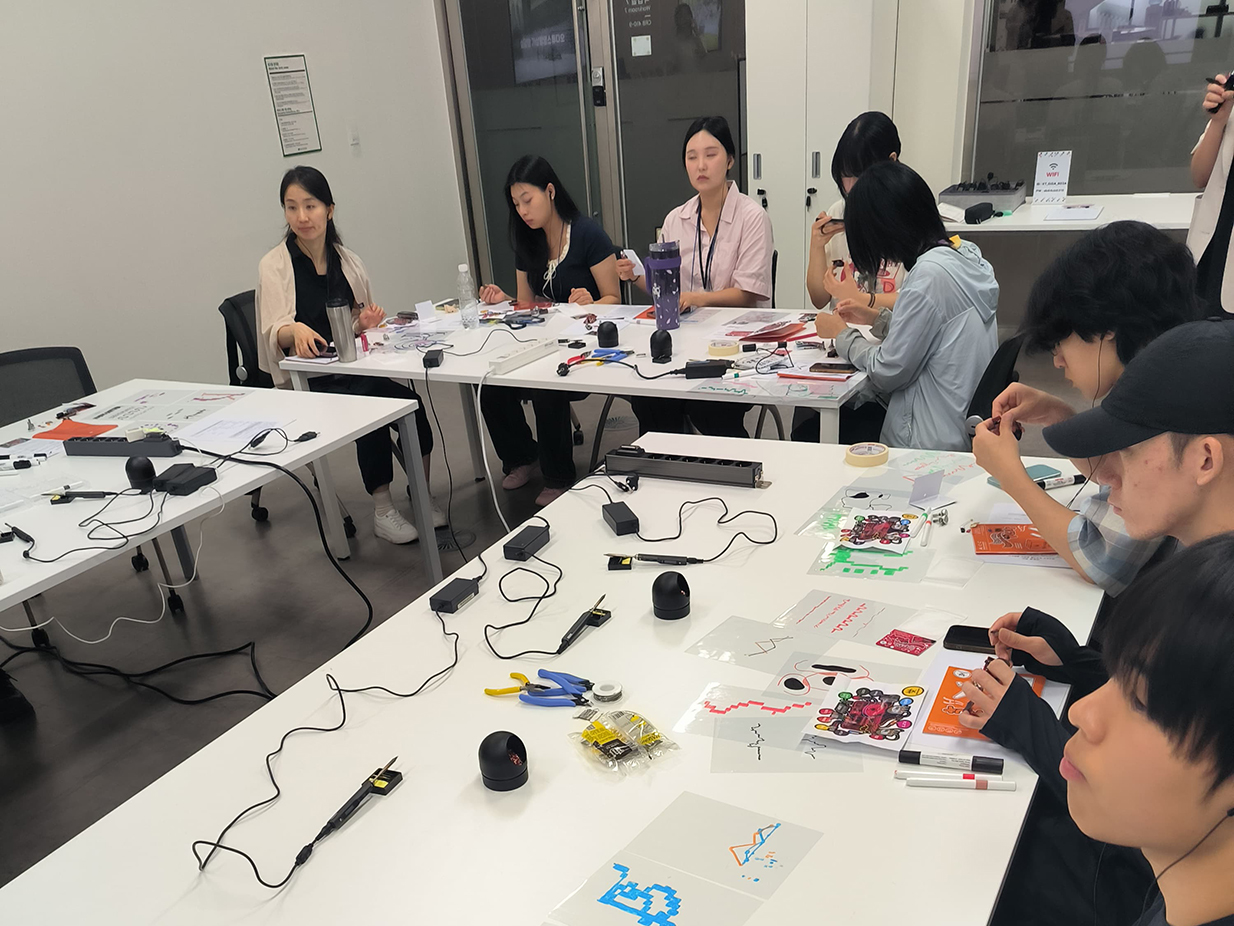
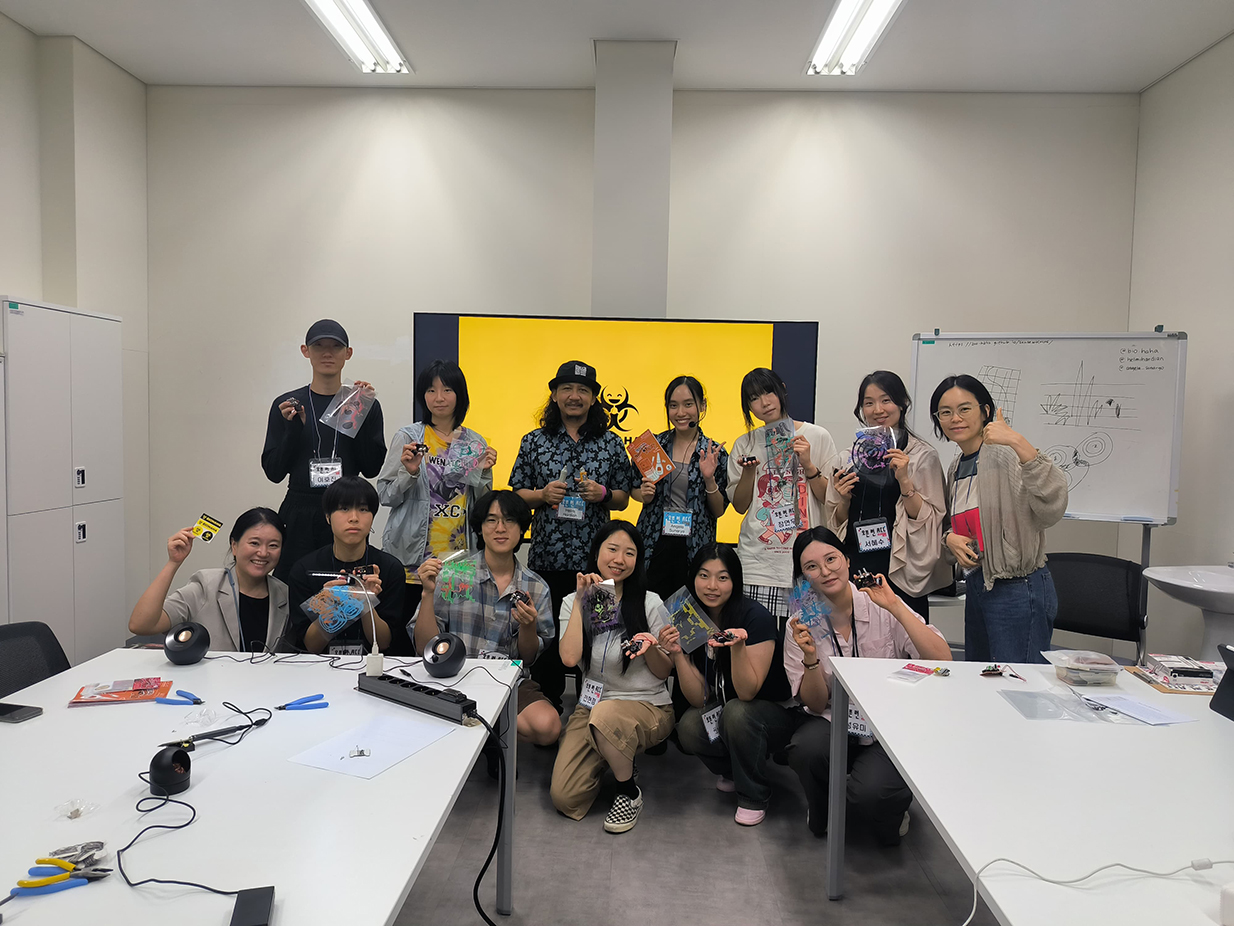
In Phase 2, the energy of the group shifted from quiet observation to active experimentation. Participants gathered around the tables with their graphic scores and DIY bio-synth kits, excited to translate their earlier sensory impressions into sound. Many were curious about how the synthesizer worked. They asked questions about the role of the IC, how the circuit responded to light, and how the module could be expanded or modified in the future.
Some participants already had basic soldering skills and naturally stepped in to support those sitting next to them. This created a small collaborative ecosystem at each table, where learning happened through conversation, hand gestures, and shared problem-solving. The room buzzed with the soft sounds of soldering irons, small tests of wiring, and the first beeps and tones from newly assembled circuits.
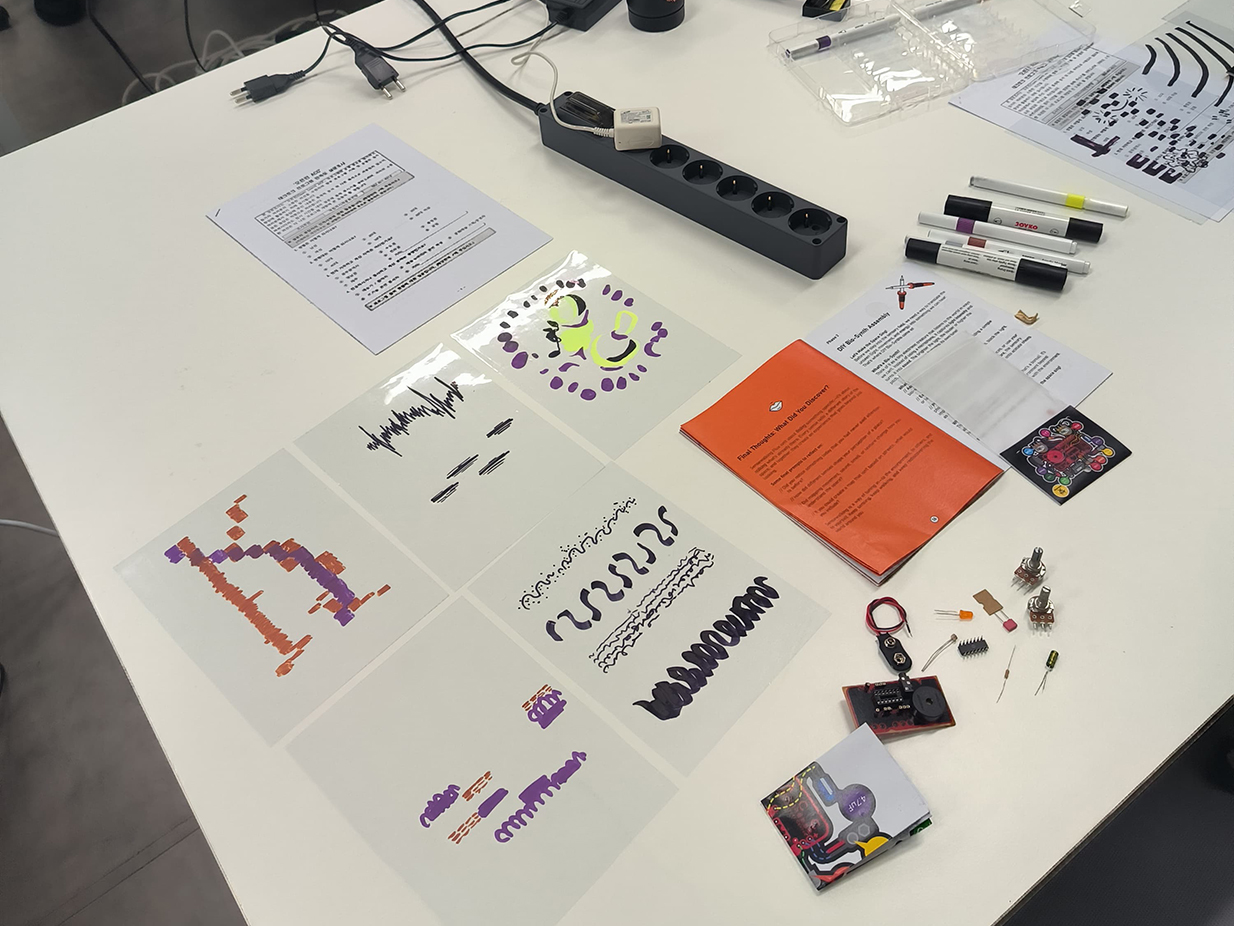
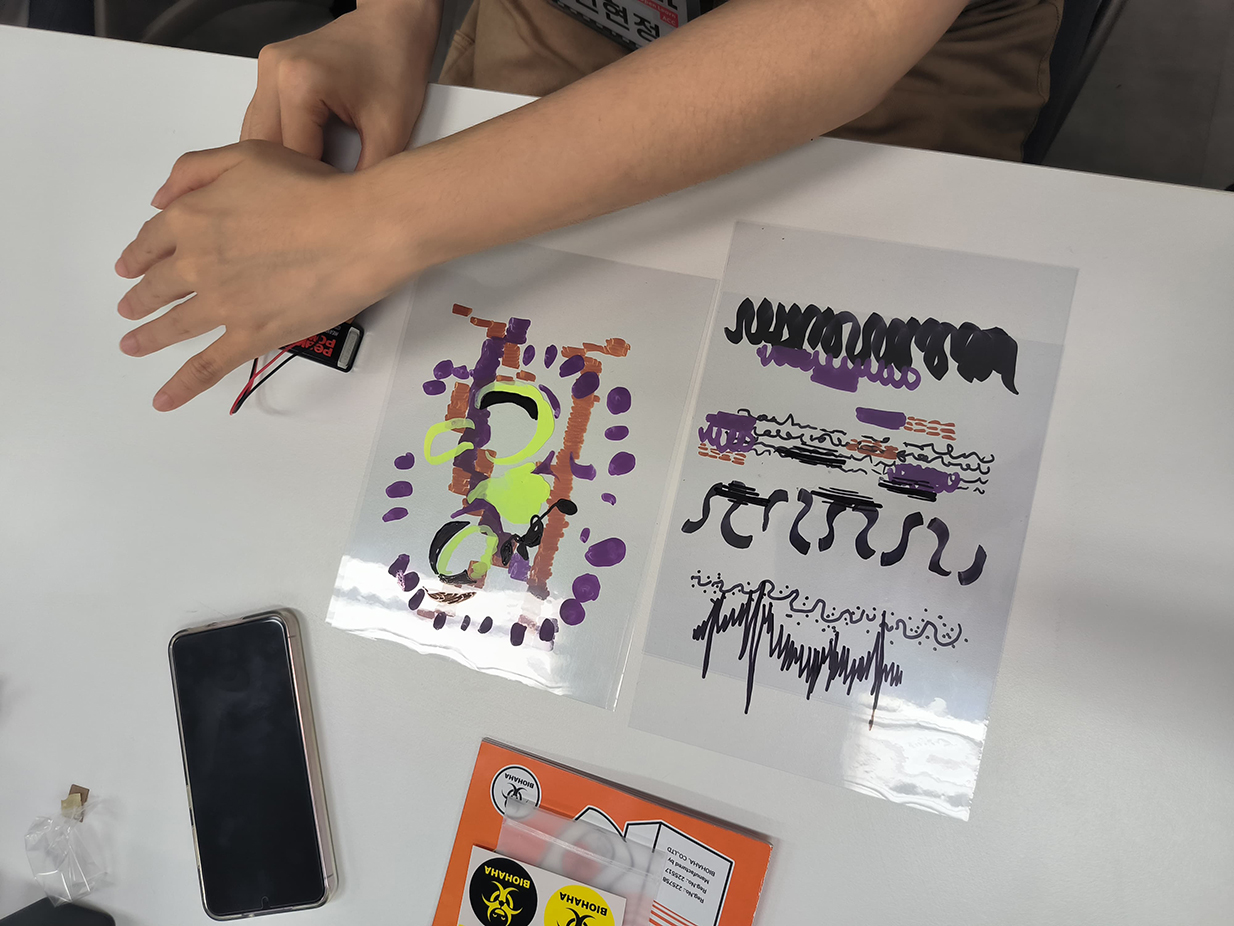
Their graphic scores, created during Phase 1, became important tools in this phase. Each score was colorful and expressive, reflecting personal feelings and sensory impressions from the walk. As soon as the synthesizers started producing sound, participants began using their hands, their graphic scores, and even shadows from their bodies to modulate the tones. The corridor, which earlier had been filled with the sounds of children and footsteps, now echoed with layered electronic chirps, pulses, and shifts in pitch.
Many participants were fascinated by the system itself. They repeatedly asked what caused the sound to change and discovered that the primary influence was light intensity. This led them to experiment with different methods of blocking, shaping, and filtering light. Some placed their graphic scores directly over the photoresistor, treating the drawings as visual filters for sound. Others moved their hands like performing musicians, creating rhythms with shadows.
The combination of earlier sensory mapping and hands-on electronics created a moment where perception, movement, and technology converged. Phase 2 became not only a technical exercise but also a playful exploration of how the city’s impressions could be transformed into sound. Through collaboration, curiosity, and improvisation, participants turned the corridor into a temporary studio of shared discovery.
By the end of Sensewalking Flux, the distinction between observer and participant, listener and performer had blurred. What began as a structured exercise in sensory awareness evolved into a collective exploration of how we experience and reimagine our surroundings.
The question that remains: How will you continue to listen?
Credits:
Documentation: Biohaha, Women Open Tech Lab, ACC Gwangju
Illustrations: Biohaha
Back Cover Illustration: Heri Subyantoro - @thegarapan